


Updated August 2026
Kinetic, figurative, architectural & inflatable
Sculptor
Sculpture for public and commercial space
Large-Scale Sculpture, Melbourne
Oddtoe is an experiential design and generative-AI animation studio based in Melbourne, creating projection, installation, and animated work for events, venues, and galleries. As a public art sculptor, I design large-scale work for the places people walk through — foyers, plazas, precincts, gardens and festival sites. Three strands: kinetic, figurative and architectural sculpture.
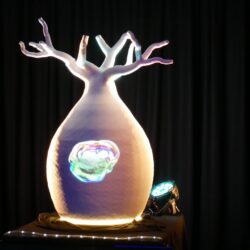
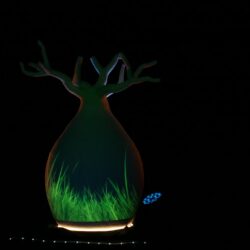
The work starts as a 3D model and ends with something installed and lit (usually). In 2019, that meant a 2.1-metre carved baobab on stage at Signal, a City of Melbourne venue — designed here, carved from polystyrene by a Victorian fabricator, reinforced, lit and projection-mapped. Related practices often end up in the same commission: installation art, projection and topiary.
Carved, cast, engineered, and occasionally moving
Sculptor & Fabrication Designer
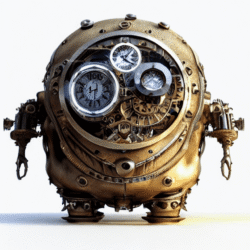
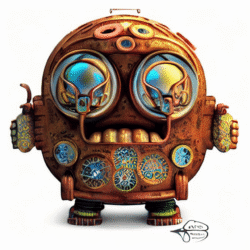



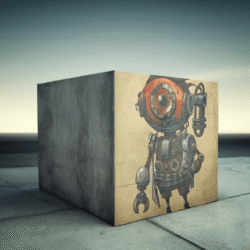
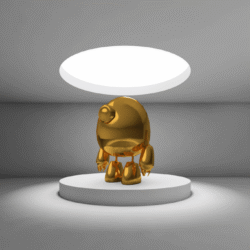
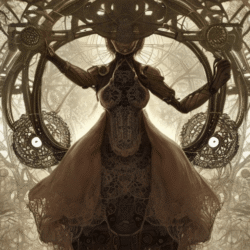
Sculpture with parts that move
What Is Kinetic Sculpture?
Kinetic sculpture is sculpture with parts that move. The movement can come from wind, water, a motor, or a programmed trigger, and it is doing artistic work of its own — not a lazy statue or a passive piece. That’s a static sculpture, nothing moving. A kinetic one changes while you stand in front of it.
It is a young form compared with carving or casting, so there is still a lot of unclaimed ground in it. For a studio that likes building its own systems, that is seriously most of the appeal.
What Oddtoe adds is the trigger. Movement can be started by a sensor, a robot, or a piece of code — a system of triggers, actions and interactions, closer to a Rube Goldberg drawing than a motor on a timer. George Rhoads planned his kinetic systems on paper before anything was built.
Kinetic work rarely stands alone here. It usually arrives as the moving element inside a larger piece — a planted topiary setting, an installation, or a robotic figure.
Three strands, one workshop
What Kinds of Sculpture Does Oddtoe Make?
Kinetic, figurative, and architectural. They share a process — designed in 3D, fabricated, finished, lit and installed — and suit different briefs. A fourth strand, inflatable sculpture, gets its scale from air.
Kinetic. Moving work for foyers, festivals and venues where the piece needs to do something, not just sit there.
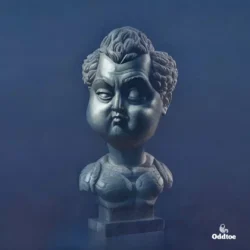
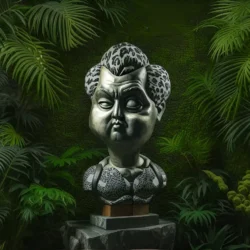
Figurative. Volume and character. Faces, creatures, bodies with too much of themselves. General with Pinkeye, a 2024 portrait bust, is a figurative sculpture — sketched and modelled in 3D for eventual carving.
Architectural. The big end — landmark and gateway pieces where the sculpture has to be engineered as much as designed. Footings, loads, wind, sign-off. This is the strand a developer or council is usually shopping for.
Most commissions borrow from more than one. Take the baobab: architectural in scale and fabrication, figurative in shape, and it moved — with projection rather than motors.
Related pages for briefs that sit between disciplines: robotics, props and fabrication, sensory gardens.
Which one does your site need?
Kinetic, Figurative, or Architectural Sculpture?
The three strands answer different briefs. This table sets out where each one goes, what it is made from, what the site has to provide, and what Oddtoe hands over.
| Kinetic | Figurative | Architectural | |
|---|---|---|---|
| What it is | Sculpture with parts that move | A figure, face or creature | Structural work built into a site |
| Where it goes | Foyers, atriums, festivals | Plazas, retail, hospitality, gardens | Gateways, precincts, building forecourts |
| Typical materials | Metal, composites, bearings, motors | Carved foam, resin, composite finishes | Steel, stone, engineered foam, composites |
| Site requirements | Power and clearance for movement | A footing or plinth | Engineering sign-off, footings, rigging |
| Ongoing upkeep | Moving parts serviced periodically | Surface cleaning and repair | Structural inspection |
| What Oddtoe delivers | Concept, 3D design, mechanism, install | Concept, 3D design, fabrication, finish | Concept, 3D design, fabrication drawings, install |
Scale from air
Do You Make Inflatable Sculpture?
Yes — inflatable sculpture is the fourth strand. Air is the most reliable medium Oddtoe designs in, and by far the easiest to ship: a two-storey character packs down to a crate and inflates in minutes on site.
Every inflatable starts exactly like the carved and fabricated work — as a 3D sculpt, resolved on screen by a 3D sculptor before anything is cut or sewn. Same designer, same pipeline, different material.
The full inflatable practice — design, fabrication, shipping, installation — lives on the Inflatable Artist page. Start there if the brief begins and ends with an inflatable.
Start here if air is one option among several — for festivals and activations, inflatables pair naturally with the kinetic and architectural strands above. One studio, one common designer, four different materials.
Councils, developers, architects, and private collectors
Who Commissions Large-Scale Sculpture in Australia?
Councils, property developers, architects, festivals and venues — and increasingly it is a planning requirement. Australian councils run “percent for art” schemes that oblige a development to spend a share of its construction budget on public art.
In Western Australia the state Percent for Art Scheme sets that at up to one per cent of the construction budget for new works over $2 million. Other councils set their own rates and thresholds, and some accept a cash contribution instead of a physical work.
The practical effect: your buyer often has a number attached before the brief is written.
Developers and architects commission the piece that gives a building its forecourt moment and satisfies the public art condition.
Councils and precincts commission work that pulls people into a laneway, park or main street, and that survives a decade of weather and hands.
Festivals and venues commission for a season — built fast, installed on a bump-in schedule, struck at the end. Oddtoe has done exactly this at a City of Melbourne venue.
Private collectors and families commission a single piece for a garden, courtyard or entrance, usually figurative and usually personal.
A 2.1-metre carved baobab at a City of Melbourne venue
What Does an Oddtoe Commission Look Like?
A 2.1-metre baobab tree, designed in 3D, carved from polystyrene, reinforced, lit from within, projection-mapped, and installed at Signal for the Melbourne International Comedy Festival in 2019. It was the centrepiece of Babbling with Baobabs, Oddtoe‘s own children’s show, staged across two performances on 1 and 2 April.
Design. Built as an electronic 3D model here in the studio, with the branch geometry limited to sections thick enough to survive a carve and a load into the venue.
Fabrication. Carved from medium-density expanded polystyrene by Industrial Carving Services in Kilsyth, Victoria, from that model, and delivered raw on an MDF base.
Finishing. Branches strengthened with epoxy resin and fibreglass cloth, then the whole form coated with timber flakes to give it bark.
Light and projection. LED lighting inside the trunk, plus animation projection-mapped and run live from Resolume — grass climbing the trunk, weather moving across it, a glowing hollow where the tree’s face appeared.
Voice. A “Baobab Translator” prototyped on Amazon Alexa let the audience talk to the tree and get an answer back. It is the ancestor of the talking-plant idea on the installation art page.
Install. Bump-in, rigging and lighting plot in a single morning, on the venue’s schedule.
From expression of interest to install day
How Does a Sculpture Commission Work?
Public commissions usually open with an EOI — a short proposal, a CV and images of relevant work — before any design is paid for. From there, six steps:
1
BRIEF AND SITE
Dimensions, access, footings, power, sightlines, weather exposure and how long the piece has to last.
2
CONCEPT AND 3D MODEL
Designed in 3D so the commissioner sees the piece in the actual space before anything is cut.
3
ENGINEERING AND MATERIALS
What it is made of, how it is fixed down, and what a structural engineer needs to sign.
4
FABRICATION
Carving, casting or building, with specialist fabricators where the scale calls for it, and regular progress updates rather than a long silence.
5
FINISH AND LIGHTING
Surface, coating, weatherproofing, and light — which is what decides whether the piece exists after dark.
6
INSTALLATION
On site, on the agreed day, to the venue or builder’s programme.
The Botero argument
Why Humour in Public Sculpture?
Because most public art is solemn, and the popular exceptions usually are not. Fernando Botero put voluminous bronze figures into plazas from Medellín to the Champs-Élysées to Singapore, and people queue to photograph them. Critics describe the work as monumental exaggeration carrying humour and social criticism at the same time.
Oddtoe works in that tradition, at a smaller scale: voluminous, characterful figures made to look pleased to see you. More of that thinking, and the stranger work that comes out of it, lives on the weird art page.
For a commissioner, the argument is a practical one. People photograph work like this, and the photographs carry it into feeds and the press and social media. A beautiful form or a really quirky figure in a public or commercial space still needs to stand out. (Think of the sculptures you walk past in your city: how many have you forgotten?). Work made to be liked tends to be defended by the people who live near it, which matters when a council reviews a collection.
Oddtoe’s figurative work sits here — General with Pinkeye and the portrait bust series. But figures don’t all have to human: dogs, giraffes, amoebas, aliens. There’s a lot still yet to sculpt and pay homage to.
Questions about
Commissioning sculpture?

Interested in seeing more…
sculpture work?

Sculpture design case study of Oddtoe's limited edition, "Roman General with Pinkeye".

See a topiarist's vision for a semi-arid topiary garden.
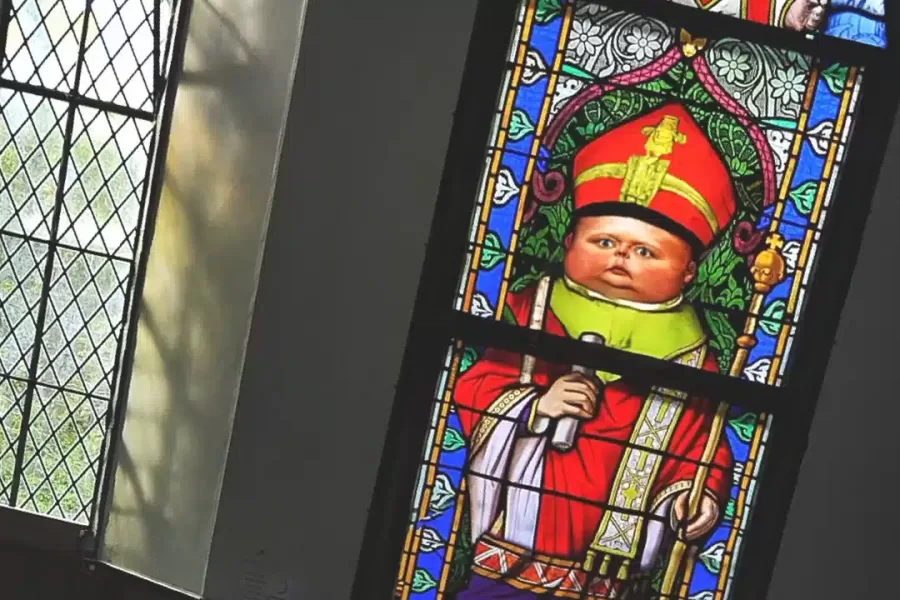
A church renovation with a sense of humor.

Commission a sculptor who designs, engineers, and installs it.
Interested in working with Oddtoe?
"*" indicates required fields