


Updated August 2026
Art you can walk around
Installation Artist
Sculpture, topiary, robotics, and light in one room
Installation Art & Experiential Design
Oddtoe is an experiential design and generative-AI animation studio based in Melbourne, creating projection, installation, and animated work for events, venues, and galleries. As an installation artist, I build pieces that occupy a room rather than hang on its wall. Topiary, robotics, kinetic sculpture, and projected light, assembled into one thing an audience can walk around.
The work is site-specific. A gallery, a hotel foyer, a laneway, a festival field, and a shopping centre atrium all want different objects, so the design starts with the space and the route people take through it. I design in 3D first, then work with fabricators to get the piece built and installed. See the studio’s experiential marketing services or the brand activation ideas list.
Installation art, kinetic sculpture, topiary, and projection
Installation Artist & Experiential Designer
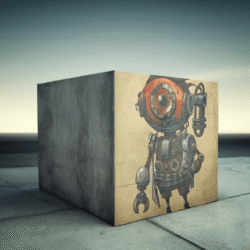
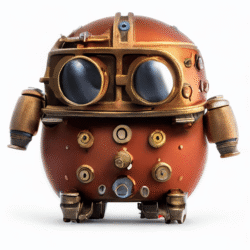
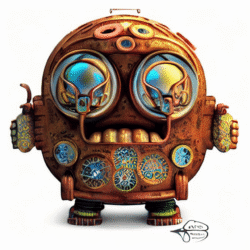
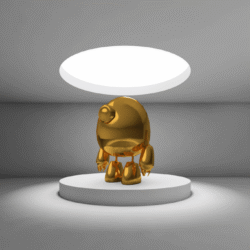



The room is part of the artwork
What Is Installation Art?
Installation art is three-dimensional work made for a particular space, where the room, the route through it, and the audience are all part of the piece. A painting works on any wall. An installation is designed around its site, its lighting, and the way people move past it.
The term covers a lot of ground. It can be one large object under a spotlight, a whole room the audience walks into, or a set of pieces spread across a park.
What those have in common is that the location is not a backdrop. Move the work somewhere else and it becomes a different work.
Oddtoe treats that as the interesting part of the job. If a viewer has to walk around something, then their path, their eye line, and what they see when they turn around are all things to design. Closely related practices — kinetic sculpture and projection art — often end up inside the same commission.
Living material, metal, machinery, and light
What Goes Into an Oddtoe Installation?
Topiary, robotics, kinetic sculpture, projected light, and generative-AI animation. Most Oddtoe installations combine several of these in one piece — a planted form with a moving mechanical element, projected onto after dark. Materials I’ve used (and wish to use) include living plants, sheet metal, resin, and fired clay.
Each of those is a practice in its own right, and each has its own page:
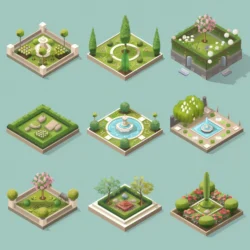
• Topiary and planted forms
• Kinetic sculpture
• Robotics and animatronics
• Projection and light
• Props and fabricated objects
• Sensory garden design
• Giant inflatables and walk-in structures
The newer ingredient is generative AI, used for concept exploration and for the animated content that gets projected onto a built piece. There is a full explainer on what generative AI animation is.
Which one is your brief?
Installation Art, Projection Art, or Brand Activation?
Lots of questions come up when you’re commissioning a art project . This table sets out a few typical ones, and then details what Oddtoe can achieve.
| Installation art | Projection art | Brand activation | |
|---|---|---|---|
| What it is | Physical objects built into a space | Light and animation thrown onto a surface | A branded experience built for a campaign |
| Where it lives | Galleries, foyers, parks, festival grounds | Building facades, walls, laneways, interiors | Shopping centres, expos, festivals, retail |
| How long it stays up | Weeks to months | One night to a season, indoors or after dark | Days to a few weeks |
| Who commissions it | Curators, councils, venues, property owners | Festivals, councils, precinct associations | Marketing and activation agencies, brands |
| Site requirements | Structural mounting, floor space, often power | Projector positions, throw distance, darkness | Build access, power, and a run schedule |
| What Oddtoe delivers | Concept, 3D design, fabrication, install | Concept, animation content, projection | Concept, props, fabrication, install, run |
Galleries, festivals, venues, and agencies
Who Commissions an Installation Artist?
The short answer is: Galleries, museums, festivals and local councils; and then there’s property owners, event venues, and of course, marketing and activation agencies working for brands. Each wants a different outcome from the same craft: a curated exhibit, a crowd after that comes after dark, a photographed foyer, or a campaign moment.
Australia’s art galleries and museums are a $2.6 billion industry in 2025-26, according to IBISWorld, which notes that institutions are staging immersive and experiential exhibitions that audiences will pay premium prices to see.
Curators and cultural institutions commission work that carries an idea and survives a season of public traffic.
Festivals and councils commission work that pulls people into a laneway, a park, or a main street after dark.
Venues, resorts, and property owners commission a hero piece — the thing in the foyer or the courtyard that guests photograph.
Agencies and brands commission installations as part of an activation. Oddtoe works as the junior partner on those: see experiential marketing.
From site visit to install day
How Does an Oddtoe Installation Get Built?
Six steps: the brief and the site, concept renders in 3D, a materials and fabrication plan, the build, the install, and documentation. Typical lead time is two to three weeks from brief to install day. Fabrication, projection, animation, and install are handled from one studio, so there is no chasing a prop maker, a content studio, and an AV contractor who have never met.
1. Brief and site. Dimensions, access, power, rigging points, sightlines, and how long the piece needs to stand up.
2. Concept renders. Designed in 3D so the client sees the piece in the actual space before anything is cut or planted.
3. Materials and fabrication plan. What gets made in the studio, what goes to a fabricator, and what the schedule and the budget look like.
4. Build. Working with fabricators and suppliers, with regular progress updates rather than a long silence.
5. Install. On site, on the agreed day, with the crew and the permits sorted.
6. Documentation. Photography and video of the finished piece, which is usually what the client actually circulates afterwards.
The bit of the old interview worth keeping
Why Oddtoe Makes Installation Art
An installation artist is interested in the viewer and in the location the piece is seen. I’d hate to not have those two things in my creative thinking anyway. I like installations that make the viewer think, or see something differently. My own twist is that I don’t mind messing with the viewer in a cheeky, friendly way.
I haven’t seen much creative cheekiness mixed with state-of-the-art technology. That is what I am after with Oddtoe.
My ingredients are part of what makes the work different. The art world was furious at Anish Kapoor for securing exclusive rights to the deepest black paint ever invented. I understand why he did it. I’d give a kidney for a litre of that stuff. That paint is on my list, along with magnets, projected light, taxidermy, kinetic sculptures, and whatever else catches my fancy.
The perfect client is a gallery owner or a museum curator who thinks in future terms. A lot of what I make has today’s zeitgeist in it, even when that is not obvious on the surface — how artificial intelligence will play with humanity, robots, sustainability. Collectors who see value in the collision of design and technology, too. What Oddtoe makes is not hang-it-on-the-wall-and-forget-it art.
The perfect project would involve the person standing next to it. One idea I am working through in my installation series Botanikus Goiterus is plants that speak to people through elaborately designed translators. The messages are generated by an AI and adapt through the back-and-forth, so more of the person ends up in the plant’s sentences. The working ancestor of that idea was the “Baobab Translator” built for Babbling with Baobabs, a 2.1-metre carved tree that answered the audience through Amazon Alexa.
The genuinely crazy thought is uplifting art. Humorous art. The world can be a bleak place, and the arts celebrate melancholy and stark subjects pretty often. Positive psychology earned a seat at the table in its field. I’d like positive art to do the same.
Questions about
Installation art?

Interested in seeing more…
installation work?

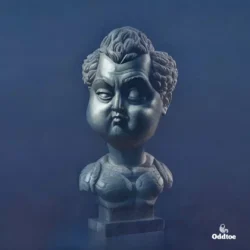
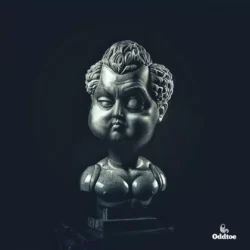
Sculpture design case study of Oddtoe's limited edition, "Roman General with Pinkeye".

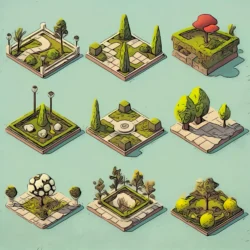
See a topiarist's vision for a semi-arid topiary garden.
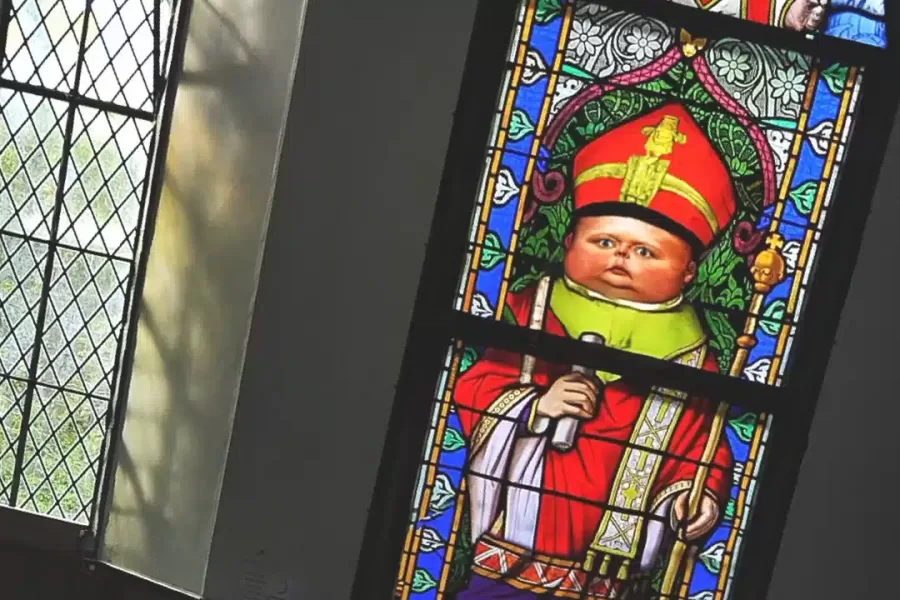
A church renovation with a sense of humor.

Commission an installation artist who designs, builds, and installs it.
Interested in working with Oddtoe?
"*" indicates required fields