
Updated September 2026
Characters built to be worn
Mascot Designer
Brand, sports, council, and retail characters
Mascot Design & Character Costume Design
Oddtoe is an experiential design and generative-AI animation studio based in Melbourne, creating projection, installation, and animated work for events, venues, and galleries. As a mascot designer, I design the character and everything a costume maker needs to build it. Somebody has to wear the result, which changes the job. Most of the design work happens before a single panel is cut.
The face has to read from thirty metres, the performer inside has to see, breathe, and last a shift, and the whole thing has to fit through a doorway and into the back of a van. I design in 3D first, then hand the finished design to a specialist costume manufacturer to build. See character design for the artwork and animation side, or giant inflatables for the same character at ten metres.
Mascot design, character design, and 3D
Mascot Designer & Character Costume Designer
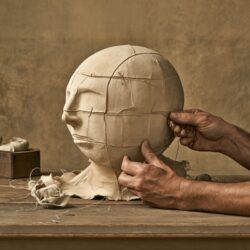
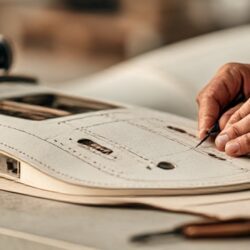
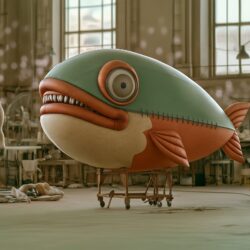
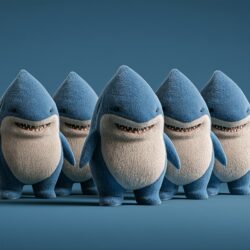
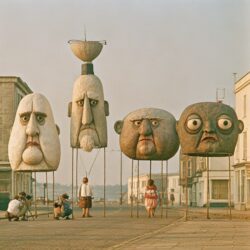
The character, and the person inside it
What Does a Mascot Designer Do?
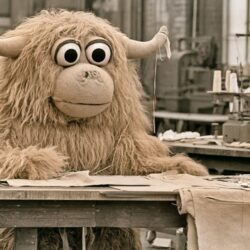
A mascot designer decides what the character is and what it has to survive. That covers the face and the personality, and it covers the performer inside: sightlines, ventilation, weight, how long a shift can run, and whether the costume fits through a standard doorway.
A brand character lives in artwork. Turning one into something a person can wear in a crowd is a different job, and plenty of characters fail that transition.
A design that works flat on packaging does not automatically work at three metres with a human inside, holding a pose, being photographed from below by someone’s child.
The designer’s job is to settle both halves before anything is patterned: who this character is, and what the body has to do. Closely related practices — character design and prop making — often end up inside the same commission.
Character, 3D model, and a maker-ready spec
What Goes Into an Oddtoe Mascot Design?
A character definition, a 3D model, turnarounds from every angle, a performer and practicality check, and a colour and material specification a costume manufacturer can quote and build from.
Each of these connects to a practice with its own page:
• Character design
• Giant inflatables and walk-in structures
• Props and fabricated objects
• Robotics and animatronics
The newer ingredient is generative AI, used for concept exploration and for the animated content a mascot ends up in — screens at the venue, social cutdowns, projection. There is a full explainer on what generative AI animation is.
The 3D model is the reusable part. The same asset that proves the character to a client produces the pitch renders, the animated content, and, if it is wanted later, the inflatable version.
Which one is your brief?
Mascot, Brand Character, or Giant Inflatable?
Three things get asked for using the same words. This table sets out what each one is, where it goes, and what Oddtoe hands over.
| Costume mascot | Brand character | Giant inflatable | |
|---|---|---|---|
| What it is | A wearable character a performer operates | A character that lives in artwork and animation | An inflated character or structure, metres tall |
| Where it lives | Match days, store openings, expos, school visits | Packaging, ads, apps, animation, social | Festival fields, forecourts, atriums, rooftops |
| Contact with the audience | Handshakes, photos, direct interaction | Screens and print | Photographed from a distance, walked under |
| Who commissions it | Sports clubs, councils, retail, charities | Brands, publishers, studios | Festivals, brands, precinct associations |
| Lead time | Design, then eight to twelve weeks manufacture | Design only | Design, then fabrication |
| What Oddtoe delivers | Character, 3D model, maker-ready specification | Character, turnarounds, on-model sheets | Character, 3D model, pattern set |
Clubs, councils, centres, and brands
Who Commissions a Mascot Designer?
Sports clubs, local councils, shopping centres, visitor attractions, charities, and the agencies that run campaigns for brands. Each wants a different outcome from the same craft: a match-day character, a safety campaign children remember, a photographed school holiday, or a brand moment on an expo floor.
Sports clubs commission a mascot that works on a match day and then does community and school visits all week.
Local councils commission campaign characters — road safety, recycling, water, libraries — that have to be liked by children and defensible to ratepayers.
Shopping centres and retail commission a resident character for school holidays and store openings, where the whole return is photographs.
Visitor attractions, zoos, and museums commission a character that becomes part of the visit rather than a costume that turns up once.
Charities commission a character for fundraising drives and fun runs, where it has to be approachable to children and read well in a photograph.
Agencies and brands commission a mascot as one element of a campaign build: see experiential marketing and the brand activation ideas list.
From brief to a costume maker’s bench
How Does an Oddtoe Mascot Get Designed and Built?
Six steps: the brief and the use, the character, the 3D model, the performer check, the specification, and handover to a manufacturer. Design takes two to three weeks. Manufacture is a separate eight to twelve weeks on top of that.
1. Brief and use. Where it appears, how often, how long a shift runs, indoors or out, and who or what it has to stand next to.
2. The character. Who this is, not only what it looks like. The personality settles the posture, and the maker needs the posture before anything is patterned.
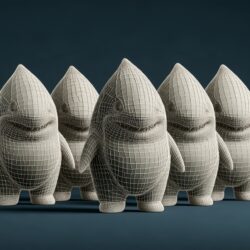
3. 3D model and turnarounds. Built in 3D so you see the character from every angle, and in the space it will actually appear in, before a sculpt exists.
4. Performer and practicality. Height range, sightlines, ventilation, weight, hand function, doorways, transport, and storage.
5. Specification for the maker. Colour references, fabric notes, branding placement, and the files a costume manufacturer needs to quote and build.
6. Handover. The design goes to a specialist manufacturer. The 3D asset stays useful afterwards for renders and animation.
Why bother designing it properly
Why Oddtoe Designs Mascots
Most mascots are a logo with arms. Someone takes a flat brand character, adds a body, sends it to a manufacturer, and what turns up is a costume nobody wants to be photographed with.
It is a performance object. Someone inside has to see, breathe, and hold the character for a four-hour shift. The crowd outside decides in a second whether it is friendly. Both are design problems, settled before the drawing is finished.
Everything I make is built in 3D and animated, so a mascot design arrives having already been seen from every angle and in motion, rather than as a front view and a guess. You see the walk before anyone cuts fabric.
The cheeky part is the bit I care about. A mascot that behaves a little unexpectedly is the one people photograph, and photographs are what the client actually gets out of the thing, long after the event is packed up and the costume is back in its case.
Questions about
Mascot design?

Interested in seeing more…
character work?
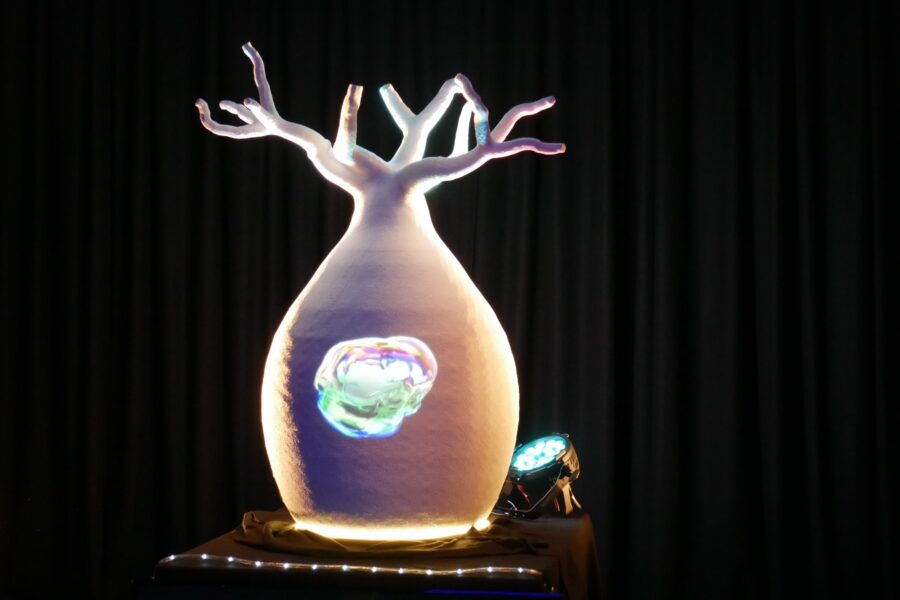
A 2.1-metre carved baobab, lit and projection-mapped, built for Oddtoe's children's show at the Melbourne International Comedy Festival.

Sculpture design case study of Oddtoe's limited edition, "Roman General with Pinkeye".

The comic panel, Oddtoe, a gag cartoon unique in the world.

Commission a mascot designer who specifies it properly.
Interested in working with Oddtoe?
"*" indicates required fields